The Top 10: Religion news in 2009

President Barack Obama’s speech in Cairo last June, when he declared his desire to “seek a new beginning between the United States and Muslims around the world,” was the biggest religion story of the year, according to a survey of the Religion Newswriters Association.

In his wide-ranging address, Obama said that the U.S. and Islam “overlap and share common principles … of justice and progress, tolerance and the dignity of all human beings,” focusing those themes on seven specific issues. The president quoted the Qur’an, the Bible and the Talmud as he held out the prospect of a relationship “based on mutual interest and mutual respect (and) based upon the truth that America and Islam are not exclusive and need not be in competition.”

The speech was well received by local Muslims, according to Taneem Aziz, leader of the Muslim Community of Northeast Tennessee.

“On the whole, it was a very positive speech,” Aziz recalled this week. “The general perception of the U.S. (by most Muslim countries) was negative, and I think the president was trying to improve that. I think it’s a good step.”

It was significant that the president delivered the speech at a highly regarded university in a historic Muslim capital, he said.

“Using the greeting of ‘Assalamu Alaykum’ (Peace be unto you) was a nice touch,” Aziz added. ”I liked the way he said would like to deal with issues and conflicts in the world today.”

But how Obama’s words will ultimately translate into policy is not yet clear, and so members of the Muslim community also feel wary, particularly about the Palestinian-Israeli conflict, which the president addressed at length.

“(Obama’s) bias towards Israel was very evident,” according to Aziz. “On the one hand he said, ‘Given our interdependence, any world order that elevates one nation or group of people over another will inevitably fail. So whatever we think of the past, we must not be prisoners of it. Our problems must be dealt with through partnership; progress must be shared.’ And then he went onto speak about the Israelis and the elevated status they had with the U.S.”

So Aziz doubts that the U.S. can act as an honest broker in the Middle East, “and that is what is needed.” On the other hand, American Muslims understand “that if he does not toe the Israeli line, he may stand to lose the next election.”

Here is the complete list of the year’s Top 10 Religion Stories, as selected by active members of Religion Newswriters Association:

1. President Obama pledges a new beginning in Muslim-U.S. relations and reaches out to the world’s Muslims during a major speech at Cairo University.

2. Health-care reform, the No. 1 political topic for most of the year, involves faith-based groups appealing strongly for action to help “the least of these,” and others, such as the Roman Catholic bishops, for restrictions on abortion funding.

3. Because Army Maj. Nidal Hasan, the accused gunman in the Fort Hood massacre, was considered a devout Muslim, the role of that faith in terrorism again comes under review.

4. Dr. Carl Tiller of Wichita, Kan., regarded as the country’s leading abortion provider, is gunned down in his Lutheran church.

5. Mormons in California come under attack from some supporters of gay rights because of their lobbying efforts in the November 2008 election on behalf of Proposition 8, which outlawed gay marriage. Later in the year, Iowa, Vermont and New Hampshire approve gay marriage, but it is overturned by voters in Maine.

6. Obama receives an honorary degree and gives the commencement speech at Notre Dame after fierce debates at the Roman Catholic university over Obama’s views on abortion.

7. The Evangelical Lutheran Church in America votes to ordain gay and lesbian clergy living in a committed monogamous relationship, prompting a number of conservative churches to move toward forming a new denomination.

8. The recession forces cutbacks at a variety of faith-related organizations.

9. The Episcopal Church Triennial Convention votes to end a moratorium on installing gay bishops, ignoring a request from the archbishop of Canterbury not to do so. In December the Los Angeles diocese chooses a lesbian, Mary Glasspool, as assistant bishop.

10. Obama’s presidential inauguration includes a controversial invocation by Rick Warren and a controversial benediction by Joseph Lowery, as well as a pre-ceremony prayer by Gene Robinson, the Episcopal Church’s first openly gay bishop.

First published in the Johnson City (Tenn.) Press, 26 Dec 2009.

Memo to would-be Bible translators: A little humility, please

The launch of a new online Bible version has been in the news lately: the Conservative Bible Project. The project’s overseer, Andrew Schlafly, even scored an interview this week on the current-events place to be, Comedy Central’s “Colbert Report.”

This “translation”  is being spotlighted because it differs from other Bible versions in at least two important ways. First, it’s written by readers. In Internet jargon, the content is open source, a “wiki.”

The theory is that, over time, the best version will emerge. It’s literary Darwinism, the survival of the textual fittest – which is ironic because the host site, Conservapedia, isn’t fond of evolution.

The other major difference is that the editors diligently impose a point of view on the text, vetting passages according to 10 “conservative guidelines.” Renderings must fit into the “framework against liberal bias … utilize powerful conservative terms … express free-market parables” and other criteria.

The results are mixed. Many changes are harmless. Others, however, mangle the meanings. For example, a straightforward translation of Acts 2:44 describes the earliest church in Jerusalem: “All who believed were together and had all things in common.”

According to the “proposed conservative” translation, however, “Everyone who believed was together and shared values, faith, and the truth.”

That last phrase simply isn’t in the actual text, Greek or otherwise. But as a note of “analysis” helpfully informs us, the original could be “misread as socialistic,” and so the Conservative Bible adds the gloss.

Likewise, when a rich man asked Jesus how to gain eternal life, Jesus replied, “You still lack one thing. Sell everything you have and give it to the poor, and you will have treasure in heaven. Then come, follow me.”

But the conservative version waters down Jesus’ words, almost doubling the word count in the process: “You lack one thing, you need to rid yourself of the desire for earthly treasure to the point that if you were destitute you would still rejoice in the Lord. For doing so will give you the greatest treasure of all, the glory of heaven. Do this and follow my teachings.”

This, despite the Conservative Bible’s claim to favor “conciseness over liberal wordiness” and “not … diluting the intellectual force and logic of Christianity.”

Apparently, any guideline is trumped by the risk of Jesus actually challenging conservative policies.

And that’s the point. The problem isn’t about being conservative or liberal. For people who take scriptures – any scriptures – seriously, a more important principle is at stake.

The Conservapedia approach turns translation on its head. Instead of coming to Scripture as students to learn what God might be saying, translators turn into dictators, forcing the text to fit their preset ideas.

But the folks at the Conservative Bible Project are not alone in this sort of ideological narcissism. They’re just more obvious. We all want to see what we want. We’re all prone to emphasize some points and then neglect or even bend others that make us squirm.

We can see it on the right, this case in point. We can see it on the left as well when, for example, interpreters go through verbal gymnastics over those thorny passages about, say, homosexual relations, war or the exclusive claims of Jesus. But if we read the texts honestly, we’ll find plenty to upset everyone.

That’s inevitable. We’re all shaped by culture, by personal experience, by the company we keep, by a dozen other factors that affect our reading of Scripture and our response to it. The key is to keep that in mind – humility is the word – and try to compensate. (That is one reason most reliable translations are done by committees of people from various backgrounds, with scholars.) This is not easy work and perfect reading is impossible, but open eyes and open minds can get us closer.

One message of the Christmas story is that God isn’t bound by our assumptions about how the world works. God is clear on that point, according to the prophet Isaiah: “My thoughts are not your thoughts, neither are your ways my ways.”

Jesus came by stealth, the story says, born to obscure working-class parents, which is not what most people expected. The ones who first recognized Jesus’ birth for what it was (at least without the help of singing angels) were traveling foreigners, probably pagan astrologers, who kept their eyes open. We still sing about them.

First published in the Johnson City (Tenn.) Press, 12 Dec 2009.

Are we fighting a just war? I’m just asking.

President Obama’s speech on Tuesday, which laid out his plans for Afghanistan, Pakistan and al Qaeda, left me feeling conflicted, uncertain, even a little queasy. Apparently I’m not alone.

There’s only marginal agreement among Americans about the military buildup, with 51 percent supporting Obama’s plan, according to a USA Today-Gallup survey taken the day after his speech. But almost all of us are fretful. By an almost three-to-one margin (73 percent to 26 percent), Americans said they are worried that the costs of the war will make it more difficult to deal with problems close to home. That is besides the normal anxiety that comes with any major conflict.

In making his case, Obama declared that “in the midst of these storms … our cause is just,” echoing words from last year’s campaign, when he said that destroying al Qaeda is “a cause that could not be more just.” (Anyone who is surprised that Obama is focusing on Afghanistan hasn’t been paying attention.)

“Just” is a significant word when talking about war, hearkening to a way of thinking that dates back to the Romans and found its most enduring expression through Christianity. When we talk about a “just war,” we’re talking ethics and theology.

There’s irony here, since Jesus told his followers to pray for their enemies and “turn the other cheek” when insulted. For the first three centuries after he walked the earth, most Christian teachers steered followers away from military service.

But this pacifist position softened as the Christian faith gained respectability in the Roman Empire, especially after it was legalized in the early 300s and made the official state religion in 380.

The question was how Jesus’ instructions to his followers applied in a wider society. Christ taught peace, the reasoning goes, but people and nations – sinners all – must still deal with the world as it is. Part of that challenge is to determine what conditions must be met for a war to be justifiable, even while recognizing that war is a result of sin.

Augustine, a North African bishop and considered one of the church’s greatest teachers, framed a “just war” doctrine through his writings in the fourth and fifth centuries, as the collapsing Roman Empire was coming under siege from northern European “barbarians.” His teaching has formed the basis for most Christian thinking about war ever since.

In its current Catechism, the Roman Catholic Church summarizes just-war doctrine, saying that, “at one and the same time,

  • the damage inflicted by the aggressor on the nation or community of nations must be lasting, grave, and certain;
  • all other means of putting an end to it must have been shown to be impractical or ineffective;
  • there must be serious prospects of success;
  • the use of arms must not produce evils and disorders graver than the evil to be eliminated.”
President Barack Obama greets cadets after speaking about the war in Afghanistan at West Point on Dec. 1.

Those who govern, “those who have responsibility for the common good,” are burdened with evaluating “these conditions for moral legitimacy,” the catechism says. In other words, war must be declared by legitimate authorities.

This being theology, of course, the answers aren’t as simple as this list suggests. Libraries are full of books that tease out various interpretations.

So does the war against al Qaeda via Afghanistan qualify as a just war? I’m no theologian and even less of a military expert, but a few answers seem clear.

It’s obvious that al Qaeda inflicted “lasting, grave and certain” damage on the U.S. and other places. (But how lasting?) Also, while success is never guaranteed – Vietnam is a harsh reminder – there seems to be “serious prospects” of success. The government has indeed approved the use of force. (An interesting footnote: Americans have not engaged in an officially declared war since 1945.)

When we beyond these few certainties, however, the answers grow murky.

For now, maybe it’s enough to make sure we ask ourselves questions like these – ethical and theological questions – if only to remind ourselves of what is at stake, even more than economics, politics or national security. As we should know by now and as Augustine and other theologians knew a long time ago, we don’t risk only the lives of soldiers when we go to war. We risk our souls.

First published in the Johnson City (Tenn.) Press, 5 Dec 2009.

A student prays. Can controversy be far behind?

Yes, that really is the name of the high school mascot.

It’s been a busy three weeks for Greg Ervin as principal of Gate City (Va.) High School. He’s been fielding phone calls almost every day from parents or the press about a church-state storm that unexpectedly boiled up after a student said a simple, heartfelt prayer at a football game.

“Somewhere lost in all this was the fact that a kid died,” Ervin said this week. “No one ever intended to sensationalize this. It was a simple act of kindness and respect.”

The story started on the night of Sept. 11, when the Sullivan South High School football team played at Gate City. Not only was it the eighth anniversary of the terrorist attacks, but the folks from Sullivan were still grieving the death of Jake Logue, one of their players who suddenly collapsed and died during a game in Knoxville on Aug. 21.

Before the game began at Gate City, a brief ceremony remembered the 9/11 victims and Logue, including a moment of silence. A student who was allowed to speak said a prayer, concluding “in Jesus’ name.”

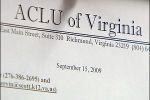
At least one parent in the stands took offense and contacted the Virginia chapter of the American Civil Liberties Union. A few days later, Ervin received a letter from the organization, advising him that a “sectarian prayer delivered over the public address system” before a football game violated a U.S. Supreme Court ruling. Such prayers, the letter noted, carry “the impermissible endorsement of the school and coerce participation” in a religious exercise.

The ACLU had been told that Gate City regularly opened its games with prayers – but that is not the case.

Photo: Kingsport (Tenn.) Times-News Web site

Ervin shared the letter’s contents with teachers and the Scott County school board and then responded to the ACLU, describing what happened and correcting the wrong information.

In its reply to Ervin, the ACLU pronounced itself satisfied: Case closed.

The story could have ended there, if a little more patience and a little less readiness to be angry had ruled the day.

“We don’t go looking around for incidents,” said ACLU of Virginia Executive Director Kent Willis in a phone interview this week, “but when someone calls and says this is what they witnessed, we respond. We usually resolve these matters quietly. We write a letter, and the official writes back to explain or clarify. That’s OK. That’s our standard procedure.”

The ACLU did not make its first letter public, but apparently someone in Scott County was upset enough to notify the press about it. Reporters soon arrived, and as word about the ACLU’s concern spread, anger flared. People wrote furious letters to local newspapers and posted unfounded accusations on Web sites.

Photo: Ned Jilton II, Kingsport Times-News.

Some Gate City students printed about 1,000 T-shirts to hand out at their Oct. 2 football game, taking a swipe at the ACLU. “I still pray…” the shirt fronts read, and on the back: “In Jesus’ name.” When the Virginia ACLU heard about that protest, it publicly affirmed the students’ rights to distribute the shirts, saying they were only exercising their constitutional right to free speech and religious expression.

While the ACLU has a long record of controversial crusades and debatable pronouncements, Willis insists it is not “anti-religion.” Any list of religion-related cases that the ACLU has handled, he said, will include as many defending the free exercise of religion as those challenging unconstitutional “establishment” of religion.

Last week in Nashville, for example, the ACLU of Tennessee completed a successful negotiation on behalf of Christian students from Belmont, Middle Tennessee State and Tennessee Tech universities who were barred from holding worship services for homeless people in a city park. The Metro Board of Parks and Recreation had “unfairly blocked religious groups’ regular use of park space,” according the ACLU, and helped to revise the policy.

“We’re not the prayer police,” Willis said this week. “The original plan at Gate City (on Sept. 11) was for a moment of silence, and there’s no problem with that. We’re down to a really minor (legal) issue that happened one time. The principal was put on the spot. … This was something spontaneous. What was he supposed to do?”

What Principal Ervin wants to do now is move past the controversy and just “remember the spirit” when two communities shared a moment of sadness and sympathy and “a student reached out and spoke as best she knew how.”

Johnson City (Tenn.) Press, 17 Oct 2009.

Kennedy: Perhaps another ‘man after God’s own heart’

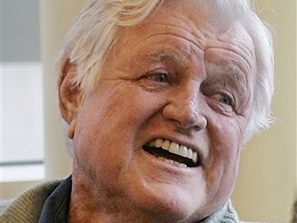
Edward Kennedy in 2008

Thinking about Sen. Edward Kennedy this week, I found my mind oddly drifting toward King David, that renowned ruler of old Israel.

Sunday school lessons highlight David’s heroics – his life as a simple shepherd, his showdown with Goliath, his psalms. But his political career and family intrigues actually resemble scenes from “The Godfather.”

As a warrior, David earned such a blood-soaked reputation that God refused to let him build a temple. His worst moment combined dereliction of duty, adultery, deception and murder, starting a chain of events that spiraled down to open rebellion by his oldest and favorite son and generations of trouble.

Even near the end of his long life, when he was feeble and perhaps senile, David gave more than the throne to his son Solomon. He also passed along a hit list. David spectacularly broke almost all of the Ten Commandments.

And yet God kept David in his pocket. He was, according to the Bible, “a man after God’s own heart.”

Perhaps that was because David ultimately threw himself before God, whether it was challenging giants or dancing nearly naked in the streets during a worship procession.

He composed psalms that questioned and railed at God in fear and frustration, cried to him for vengeance against enemies and gloated over their downfall. But knowing his sins, he invariably came pleading for mercy and forgiveness. He always praised God in the end, seeking him wherever he might find him – under the stars, below the mountains, in the temple, in his bedroom, through the valley of the shadow of death. Despite everything, this womanizing, scandalized, troubled chieftain could still write, “My help comes from the Lord.”

Maybe it was that relentless if imperfect pursuit that warmed God’s heart.

Culture and circumstance – not to mention 3,000 years – put a lot of distance between King David and Sen. Kennedy. Even so, elements in Kennedy’s life and career sound familiar.

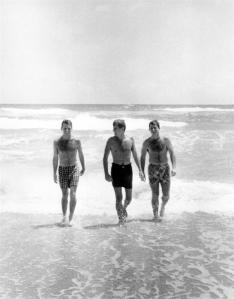
Bobby, Jack and Teddy: The Kennedy brothers in 1957.

The senator for years lived a kind of high-wire act, often played out in public, that tried to balance great personal gifts, high ambitions, deep flaws, terrible tragedies and a durable faith.

As one of the most effective legislators in American history, he likely made a more profound impact on the nation than his celebrated brothers. Along the way, he showed graciousness in an ungracious town, whether dealing with political allies or foes, junior staffers or people on the street.

The best-known and perhaps most powerful Roman Catholic politician in the country, Kennedy cited his faith as one of his central motivations in his commitment to helping ordinary people through education, higher wages and, above all, health care. In what was for him typical bipartisan fashion, he worked with Republican Sen. Orrin Hatch to pass the Religious Freedom Restoration Act of 1993, an effort to relieve governmental burdens on the exercise of religion.

But Kennedy didn’t walk lockstep with his church, and he put himself at odds with Roman Catholic teaching most severely with his support of abortion rights, an inconsistency that not even the famous Kennedy mystique could overcome. And despite the personal peace that his second marriage brought him, divorce and remarriage offended many fellow believers.

Kennedy was a flawed person, and he knew it. In a 1991 speech at the John F. Kennedy School of Government at Harvard, Kennedy openly addressed “the faults in the conduct” of his private life.

“I realize that I alone am responsible for them, and I am the one who must confront them,” he said.

Despite this – or possibly because of this – by all accounts he found strength and comfort in his faith, especially during his last years. The Cape Cod parish priest regularly visited the Kennedy home and held a private family Mass there every Sunday. Kennedy led his family in prayer after the death of his sister Eunice three weeks ago, and he spent his own last hours in prayer.

“He was a Rabelaisian figure in the Senate and in life, instantly recognizable,” wrote John Broder in The New York Times obituary this week. “He was a celebrity, sometimes a self-parody, a hearty friend, an implacable foe, a man of large faith and large flaws, a melancholy character who persevered, drank deeply and sang loudly.”

Something about Edward Kennedy makes me hope that, like King David, he was finally a man after God’s own heart.

Johnson City (Tenn.) Press, 29 Aug 2009.

PS: The health-care debate, the UK and US

It's not quite like this anymore.
The trucks are newer, and so is the system.

I’ve been getting a lot of feedback (relatively speaking) to last Saturday’s column. Most of the comments have been complimentary, which is gratifying — but also a little worrying. When I shipped the column to the paper, I didn’t think it was particularly strong or insightful. Saying people should treat each other with civility? (Hey, let’s try the Golden Rule!) should be a no-brainer. But it apparently struck a nerve. As much as I’d like to believe otherwise, I’m pretty sure that says more about the state of the debate — and maybe the culture — than about my acumen.

NPR’s Morning Edition ran an interesting segment today, an interview with Lord Ara Darzi, a surgeon and British government adviser, about Britain’s National Health Service, which you can read or listen to here. Darzi was debunking misinformation being circulated about the NHS by Sen. Charles Grassley of Iowa and the Club for Growth, a conservative group, among others. PolitiFact, which, as its name implies, tries to sort out political truth from fiction — and has a pretty good track record –  labeled the CFG ad “misleading.”

My family and I lived in England for five years in the 1980s, working in a church in the north of the country, near Manchester and Liverpool. This was during Maggie Thatcher’s years as prime minister, long before the reforms that took hold in the last decade. The NHS certainly had serious problems at the time. A woman in our church, for instance, waited three years for knee surgery.

Mrs. Thatcher, a Conservative (or “Tory,” in the jargon) set about “reforming” the system (along with other major industries and the whole economy), and there’s little doubt the NHS needed fixing. It was hemorraging money. There was a brain drain, with physicians leaving the country for better paying positions — in the U.S., for instance.

One of the loud social debates at the time was whether it was morally defensible for people to buy private supplementary insurance, which was just becoming commercially available at the time. Such coverage wouldn’t replace NHS coverage, but it was intended to help policyholders avoid situations like three-year waits for knee surgery. The question was whether we wanted a society where people could get better medical care just because they had enough money to pay for private insurance. It didn’t seem right to many people, including the majority in my part of the country, which was dominated by the Labour Party.

Even so, no major voices seriously proposed killing the NHS. Reform it, rebuild it — yes. Eliminate it — no way. It was a national institution, a social contract.

And I must say that, despite the problems even then — which I believe were much more serious than they are now — the NHS was a good service. Both our daughters were born there, and the prenatal (“antenatal”) care was superb and comprehensive, as was the care in the hospital and in the weeks following the births, with midwives and home health aides and even our GP (general practioner, our family doctor) visiting the new mother and babies at our home. Ordinary care, including dental, was at least as good as anything we experienced in the U.S.

We had no forms to fill out, after registering with the local health care authority. On our first few visits to the doctor or dentist, I’d offer to pay. We were guests, I reasoned, and not even asked to pay taxes to Her Majesty’s Inland Revenue. But I’d get strange looks from the receptionists. The first time I offered to pay at our dentist’s office, the woman behind the counter waved me off. “You live here,” was all she said.

Even in the worst days of the NHS while we were there, when I was a minister who performed almost three dozen funerals in less than five years and made more hospital and sick calls than I can recall — most of them on elderly people — I never once got a whiff of any NHS version of “death panels” or suggestions that we should “pull the plug on Grandma.” It’s just not part of the equation.

I don’t know what the American health care system should look like. (The status quo isn’t working well for far too many people.) Britain’s model may not be the right one for us. But at the very least, I hope we stop using the British system as a red herring, particularly since the fearful scenes painted by Grassley and the Club for Growth resemble the fiction of Stephen King more than reality.

Critical condition: The health-care debate isn’t too healthy right now

Anyone paying attention to the news this week knows that Sen. Arlen Specter of Pennsylvania got shouted down in a town-hall meeting about health care, as did some citizens who just wanted to ask a few questions.

When President Barack Obama spoke in New Hampshire, protesters outside compared him to Adolf Hitler, repeating the stupidity of left-wingers who compared George W. Bush to Hitler a few years ago. (Note to activists: The fastest way to get reasonable people to stop listening to you is to compare someone to Hitler.)

All this followed a few weeks when national leaders, including former Alaska governor and vice-presidential candidate Sarah Palin and Sen. Charles Grassley of Iowa, repeated scary lies about what was being proposed in the health-care plans.

Several weeks earlier, Sen. Jim DeMint, a Republican from South Carolina, was a little too frank for his own good when he approached health care more as a political weapon than a problem for his constituents. “If we’re able to stop Obama on this, it will be his Waterloo,” he said. “It will break him.”

Watching these videos and listening to these reports, I thought, “This isn’t good for the nation’s soul.”

I usually don’t think of the nation literally having a “soul.” I take it as a metaphor, a poetic way of talking about our society’s values. But however we think about it, something corrosive and discouraging and damaging is going on.

It’s not the issue itself. Health care and insurance is perhaps the most important domestic question of our generation and we need to have a good, open debate about it.

But that’s the problem: Right now, the debate, or at least the part that is getting the most attention, is neither good nor open. Not when political leaders are blatantly more interested in making partisan gains than in addressing national problems. Not when a fellow citizen can’t ask an honest question in a public meeting without getting screamed at. Not when talk-show hosts like Glenn Beck and Rush Limbaugh joke about killing Speaker of the House Nancy Pelosi. Not when people carry concealed weapons to town-hall meetings, as happened in Arizona last week.

Angry reactions are predictable. Log in to a left-wing blog or the comments section of any big news organization, and you’ll find plenty of broad-brushed insults labeling conservatives as kooks, idiots and threats to the nation.

Even some conservatives are getting concerned.

“The guns are coming out. The risks are real,” wrote David Frum this week in his New Majority blog. “It’s not enough for conservatives to repudiate violence, as some are belatedly beginning to do. We have to tone down the militant and accusatory rhetoric. If Barack Obama really were a fascist, really were a Nazi, really did plan death panels to kill the old and infirm, really did contemplate overthrowing the American constitutional republic—if he were those things, somebody should shoot him.

“But he is not. He is an ambitious, liberal president who is spending too much money and emitting too much debt. His health-care ideas are too over-reaching and his climate plans are too interventionist. The president can be met and bested on the field of reason—but only by people who are themselves reasonable.”

Some people in the self-styled “mob” who disrupt town-hall meetings claim the American Revolution as their inspiration. They should remember that the revolution was framed by appeals to reason and defended with lengthy argument, and that a declaration of independence – which didn’t pass with a unanimous vote – emerged from the Continental Congress, where formal rules of order allowed representatives to debate passionately, speak honestly and produce something of value.

The health-care issue calls for our best efforts, our best thinking and our best examples of citizenship. Lives are literally at stake.

Today we’re not at our best. The strident and sometimes threatening town-hall rants, the lies and the distortions – all tactics closer to “fascism” than anything Obama has ever suggested – are distracting us from actual issues and getting in the way of potential solutions.

Since I’m not even sure we can talk about the nation having a soul, it might be a stretch to think that some simple scriptural words might help carry on an emotional debate: Do to others what you would have them do to you.

Maybe the Golden Rule even sounds naïve. But it’s a start.

Johnson City (Tenn.) Press, 15 August 2009.

Christian colleges, commencements, controversy

Notre Dame, the nation’s most prestigious Roman Catholic university, walked a fine line last week when President Barack Obama, who favors abortion rights, delivered the commencement address. Critics said the school crossed a line just by inviting him. Even more complained about granting him an honorary degree.

At least two dozen graduating seniors boycotted the ceremony. At least three dozen protesters were arrested on the campus.

Starting with Dwight Eisenhower, Notre Dame has invited most presidents to speak at commencement. (One notable exception: Bill Clinton.) But this year, the invitation to Obama upset the delicate balance between Notre Dame’s Roman Catholic teaching, which strongly opposes abortion, and its academic freedom.

A 2004 statement from the U.S. Conference of Catholic Bishops is straightforward: “The Catholic community and Catholic institutions should not honor those who act in defiance of our fundamental moral principles. They should not be given awards, honors or platforms which would suggest support for their actions.”

On the other hand, as a leading university Notre Dame is obligated to academic freedom.

While not as high profile, the dozens of church-related colleges and universities in this region struggle with the same tensions, often played out at their big, public events.

Formal criteria for choosing commencement speakers are few and far between. Generally, colleges select people of accomplishment, who are likely to present a worthwhile message, and who have contributed significantly to society or to the institution. Most church-related colleges also want their speakers to be people of faith.

 “I try to find a speaker whom I think will be challenging,” said Don Jeanes, president of Milligan College, affiliated with Christian churches and churches of Christ (and where I teach). “Secondly, we want it to be a person of strong Christian commitment … someone who is consistent with the majority of where our constituency would be in theological persuasion.”

King College in Bristol, Tenn., affiliated with the Presbyterian Church USA, considers its commencement address as part of the academic program, according to Tracy Parkinson, assistant dean of the faculty.

“Commencement is special because of the nature of the school,” Parkinson said. “At the same time, if you’re going to bring folks from a wide variety of perspectives, as we do during the year, there will be people on campus who agree and some don’t. It’s an important part of what we consider the academic integrity of what we do.”

Parkinson said that considering the college’s normal criteria for commencement speakers – “a professing Christian, who’s accomplished in his or her field” – then Obama would be “a reasonable candidate” as a speaker, as would people “on the other side of any number of political or social issues.”

Public figures by definition are engaged in public issues, which can make it difficult to avoid controversy, according to Dirk Moore, director of public relations at Emory and Henry College, a United Methodist school in Emory, Va.

“Often what you want to bring to a commencement address is someone who’s been engaged in public service and so has had to take certain positions,” he said. “It can be hard not to be lightning rods.”

But part of the learning process is hearing from people who have different points of views, Moore said, and that process doesn’t end at commencement.

“Ultimately what you have here is a learning opportunity,” Moore said. “It would be unwise for any educational institution to keep them out simply because we may disagree with them on particular issues. We’re here to serve and educate students, open their perspectives on the world.”

Moore thinks the Notre Dame administrators were correct to invite Obama – not in spite of the controversy but because of it.

“Controversy is never pleasant for colleges and universities, but that’s kind of expected, to have voices expressing opinions,” he said. “What are you going to do, ridicule them for having firm beliefs?”

That’s one reason Moore was impressed with the Notre Dame students who protested Obama’s presence.

“A university is doing its job,” he said, “when it’s having students who come out with convictions that are important in their lives.”

Johnson City (Tenn.) Press, 23 May 2009.

Still troubled after all these years: The messy history of Israel and Palestine

israel-born-in-a-day
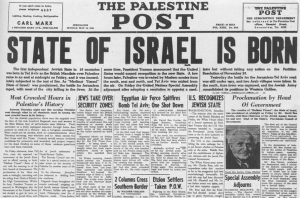
A Jerusalem newspaper on May 14, 1948, announcing the modern state of Israel.

Israel was a nation full of heroes.

That’s what I concluded as a teenager when I nurtured a fascination with the new nation of Israel. The nation seemed to be a modern miracle brought into existence by faith, ingenuity and courage.

A lot of history has passed since then. May 15 was the anniversary of the nation’s founding in 1948, when Britain ended its post-World War I “mandate” as Middle East caretaker, in theory leaving Arabs and Israelis to sort out their own problems. It hasn’t worked very well.

Israel through adolescent eyes

My interest in Israel sprang partly from family: my father was Jewish. But long after my parents divorced and I had converted to Christianity, I clung to a thin claim to Judaism. As the Yom Kippur War raged in 1973, my brother and I even discussed the merits of fighting for Israel, should the war last several more years. (Our Israel-loving pastor assured me that we could be good Christians if we fought for love of Israel, but not if we hated Arabs.)

My early adolescent eyes saw an idealized story, enhanced by biblical quotations: A long struggle to gain a Jewish homeland, historically justified after the Holocaust. A bold underdog fighting for survival against the surrounding Arab foes. A new community carved from a sliver of land, finding a noble form in the kibbutz. The new Israel was transforming Palestine from a chaotic, barren desert into a fertile, blossoming society.

This straightforward reading was inspiring to a sort-of-Jewish boy whose own country was militarily and morally bogged down in Vietnam.

Winners get to write history

But as the cliché says, the winners get to write the history, and my lopsided view of Israel omitted the plight of the Palestinians. I was reminded of this a couple of weeks ago, during a conversation with Hanna Massad, pastor of Gaza Baptist Church. (See last week’s column.)

Massad’s parents were Palestinian, living in Jaffa in 1948. Overnight they became refugees, forced from their homes along with 700,000 other Gazans, including more than 50,000 Christians. Many of their ancestors had lived in the same places a thousand years earlier. Masses of displaced people scattered around the region, landing in camps in Syria, Jordan, the West Bank or beyond.

All this was part of a maze of political dealing and double dealing that started as the old Ottoman Empire, which had controlled the region for centuries, was defeated by the Allies during World War I.

During the next 30 years, declarations and agreements among European powers, Arab leaders and Zionist organizations – Jewish groups committed to establishing a national homeland in Palestine – tried to balance their various interests. Religion, ethnicity, economics and property claims only complicated matters, as both Jews and Muslims cited Scripture and history.

The British, given control of the region in 1922, sometimes favored Arab interests, sometimes Zionist. Zionists and Arabs occasionally appealed to their common heritage and tried to cooperate and make room for each other. But those times grew less frequent as time passed, as frustrations grew and as sometimes deadly violence flared among both Palestinians and Zionists, usually in reaction to changes in British policy.

By 1947, when the British government referred the matter to the newly formed United Nations, reconciliation seemed impossible. The UN finally recommended forming two states, Arab and Israeli, with Jerusalem designated as an international city.

After the British left on May 14, 1948 – a day earlier than scheduled, which caused chaos – the tensions erupted into war. But Israel secured its foothold and took over most of Palestine. The 61 years since have spiraled into bigotry, terror and vengeance, occasionally punctuated by hopeful attempts at peace.

No one is clean

My first inclination still is to sympathize with Israel. Given the history of the Jews – repeatedly driven from place to place over three thousand years – it’s easy to understand their sense of insecurity even as they established a modern homeland.

But if I take a step back, I can begin to see more of the Palestinian complaints, how their own claims to law, history and religion were set aside 61 years ago. I can see past the stereotypes and meet real people in this story, such as Hanna Massad and his family.

I can see that my adolescent view, with its easy heroism and uncomplicated morality, isn’t adequate. I can see, as the Scripture says, that no one is clean. No, not one.

 Johnson City (Tenn.) Press, 16 May 2009.

Palestinian Christians stand ‘between two fires’

gaza_strip_may_2005

Here’s one measure of just how heated the subject of Israel and Palestine can be. When the Christianity Today Web site reported in January that the Palestinian Bible Society, located in Gaza City, may have been hit by an Israeli missile during the brief but intense winter war, some readers were anything but sensitive.

“And my response is … so what?” wrote one. “Lots of buildings have been hit. Is this an attempt to move Christian sympathy for Hamas?”

“If I choose to live among the enemies of freedom,” added another, “I shouldn’t be surprised that I might be destroyed when the friends of freedom respond to threats.”

One reader took offense at this remark, calling it “sickening” because it ignored the fact that Palestinian Christians were living in their own homes. No one said “amen.” When another commenter criticized Israel, however, others piled on.

“Your what happens when dumb liberals think they understand Christanity,” one grammar-challenged reader replied.

No matter what someone thinks about the Israel-Palestine morass, this wasn’t a high-water mark for Christian solidarity.

Hanna Massad (center) with members of the Gaza Baptist Church (date unknown).

Hanna Massad was not part of that discussion – it’s doubtful he’d want to be – but he knows Gaza better than any of those readers. Gaza is his home.

Massad is the pastor of Gaza Baptist Church, the region’s only evangelical congregation. His wife managed the Palestinian Bible Society – that is, until they, their two young daughters and several extended family members left Gaza for the West Bank in 2007.

They departed literally to save their lives, thinking they would be gone for a matter of weeks instead of almost two years.

The Bible Society building was firebombed at least twice, a repeated target of Palestinian extremists. The worst moment came in October 2007, when a close friend and colleague, 29-year-old Rami Ayyad, who managed the Bible Society bookstore, was kidnapped in broad daylight and later shot to death. Gazan authorities condemned the murder and promised an investigation, but without results.

Massad and his family came to the U.S. last August for a one-year sabbatical, so he could study at the Overseas Ministries Study Center in Connecticut. He visited East Tennessee last week, speaking at Milligan College and Emmanuel School of Religion.

Massad, who received a Ph.D. in theology from Fuller Theological Seminary in California, chooses his words carefully as he describes life for Palestinian Christians. His voice is sad, not angry.

“We are caught between two fires,” Massad said last week during a lull in his speaking schedule. “On one hand there’s the fire of the Israel occupation. Then there’s the fire of militant Muslims, who are not happy with us.” Massad, 49, is a master of understatement.

Since the Hamas party gained control of Gaza in the 2006 elections, the already stressed Christian community has become a more frequent target of Muslim extremists. Hamas officials condemn attacks but take no effective action. The entire Christian population of Gaza has dwindled to about 2,000 believers, living among a population of 1.5 million.

For its part, Israel doesn’t seem interested in a real solution, Massad said. The infamous 432-mile security wall, severe travel restrictions (which separated Massad and his wife for almost a year), the continuing construction of settlements – all stir up Palestinian resentments. Last winter’s conflict cost 13 Israeli lives, compared to 1,300 Palestinians, most of them civilians.

Against that backdrop, Massad stands in an awkward and dangerous place. As a Palestinian, he is suspect to the Israelis. As a pastor, he makes himself a target for Palestinian extremists who hate Christians and think he may be aligned with the U.S. because the word “Baptist” is on the church building and he won’t call Israel his enemy.

“Humanly speaking, it’s easy to be depressed,” he said. “There are militants on both sides. But you cannot live without hope. With good intentions, all things are possible.”

When Massad and his family return to Gaza this summer, he anticipates “a lot of rebuilding of souls” in the congregation and community. They plan to restart the library and school, and to open a health clinic. The role of the church, he said, is to help create a culture of peace.

“We’ll do work to reflect God’s love,” he explained. “We can continue to have love for Israel and for the Palestinians. Love for one should not make you hate the other.”

Johnson City (Tenn.) Press, 9 May 2009.